Update 9/28/18: I am now an affiliate with Z Publishing House. I do receive a small commision for each purchase through this link (http://www.zpublishinghouse.com?rfsn=1831564.e6264) if anyone is interested in anthologies of emerging writers.
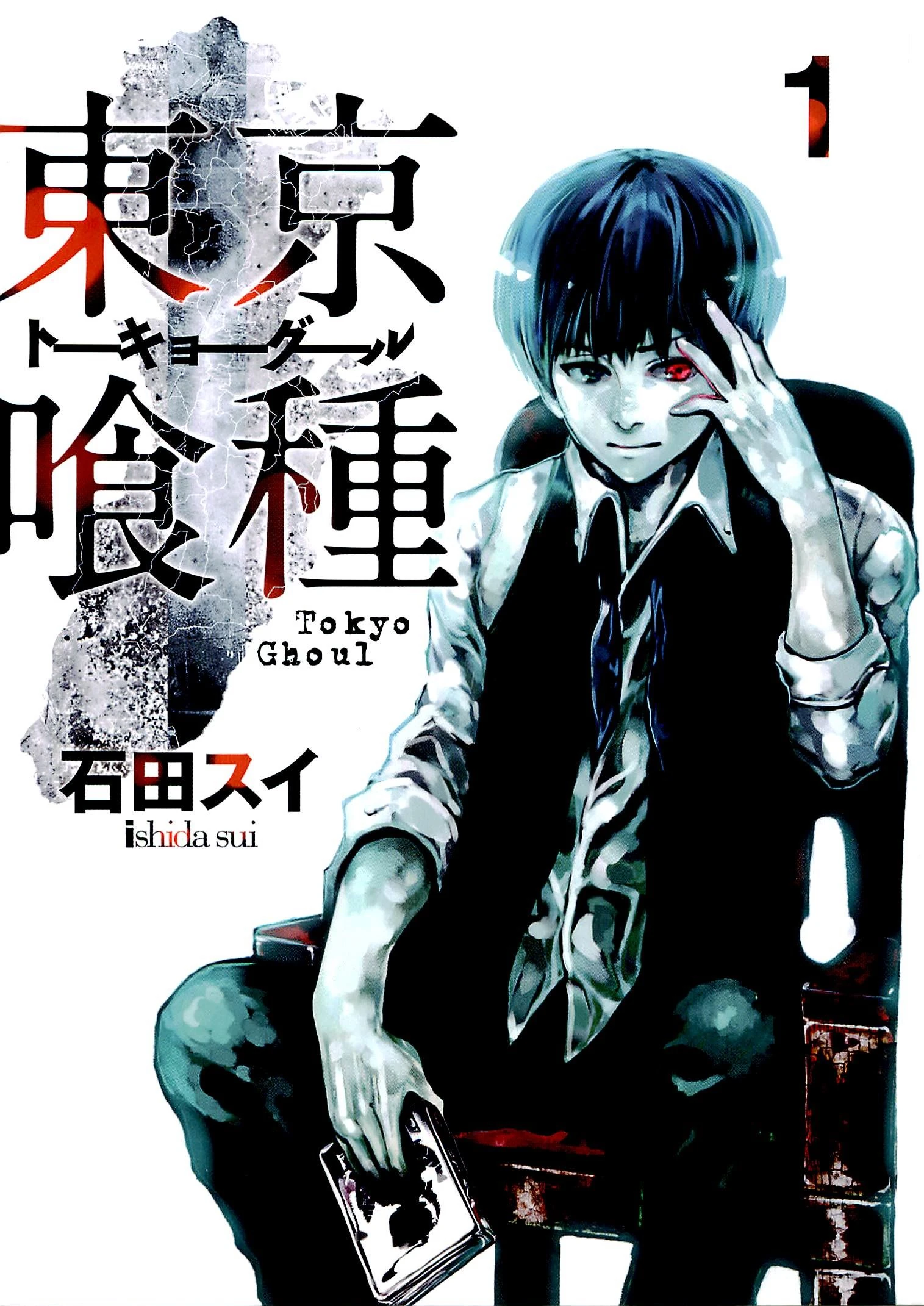
Tokyo Ghoul volume 1 was written and illustrated by Sui Ishida in 2011 and published by Shueisha.
This story is a dark fantasy rated OT for older teens for gore and serious
psychological elements. Trigger warnings ranging from abuse to depression to
torture—be careful going into this series.
Tokyo Ghoul volume one begins the story of ordinary college
freshman, Kaneki, wanting to ask out a girl he’s seen frequenting a local
coffee shop. While the date is going well, readers are informed of the dark
creatures of this version of Tokyo—creatures called ghouls who can only survive
by feeding on human flesh-- and a particularly nasty ghoul who is never
satisfied and continue to gorge on humans which is not normal for ghouls. After
an accident, Kaneki wakes up in the hospital, his date is dead, and her organs
were used in a transplant to save his life. He is now half ghoul—unable to eat
human food anymore and slowly going insane from hunger yet not consciously able
to bring himself to attack and eat another person—and must try to find his
place in this new world without being killed by another ghoul, captured or
killed by the special ghoul-hunting unit of the police force known as doves, or
murdering his best friend.
While the first volume is a little clunky in its set up, it
does attempt to make a comparison to Kafka’s Metamorphosis which is a short
story about a young man who is turned into an insect. Tokyo Ghoul applies this
concept to a real world—though still fantastical—scenario and lets the
characters run with it.
You can read this as a dark fantasy or you can look at it as a question of what does it mean to be human? What is humanity and morals when it comes to survival? There are oppressed groups and police brutality on one side and protecting the innocent and survival of another group on the other. Depending on how deep you want to read, you can enjoy this series over and over again.
Kaneki is a shy and
kind-hearted character with little confidence in himself but he’s still
resourceful, doing his best to figure out his new situation and protect his
friends, but he does whine and cry quite a bit. Hide—Kaneki’s best friend—is
more outgoing and is depicted as a goof-ball character, though he does prove
himself to be caring and observant.
Touka is the typical female badass but she is also the ghoul character who
spends the most time with Kaneki, forcing him to learn how to survive while
criticizing him for his humanity.
Visually this series is amazing. The covers are absolutely
gorgeous. The internal artwork is a great balance of light and dark panels with
clean lines, interesting angles, and not overly complicated or busy. Granted
there isn’t a lot of fighting in this first volume so that may change, but it
does make it easy to read. Every character is distinct and emotion is expertly
depicted to show both personality and character dynamics.
As I said, the opening is a bit clunky. I blame this on
attempting to set up such a strong comparison to Kafka so quickly instead of
letting it build on its own. There also seems to be two beginnings that
confuses the plot at first but once you get into the rest of the story, it
starts to get easier and the metaphor is slipped into the background instead of
shoved in your face. This is a darker story so characters tend to be more
serious and any jokes are short and between characters. Symbolism is incredibly
important, so keep an eye out for this; references to stories, animals, and
change are key to reading further into this series.
Now I will confess, I’ve read most of this series already
and it’s one of my favorites. I love seeing Kaneki develop and grow as a
character while still trying to hold onto his morals and humanity. I like
seeing how both humans and ghouls think of each other as animals and being
unwilling to give any ground because of the abuse each side has received in the
past. Everyone has some kind of personal stake in this story. That being said,
Kaneki’s whining and crying do get a bit old after a while but I know that this
changes as the story progresses so I forgive it.
Tokyo Ghoul is an incredibly popular series and with good
reason. If you can forgive the opening and the slow build and discoveries, it
is well worth reading. Again, this series does deal with some more mature
themes so read with caution.
Comments
Post a Comment